Design Trends
Pairfect Design Studio
Pairfect Design Studio

Vignesh
UX UI Designer & Content Writer
Dec 30, 2025
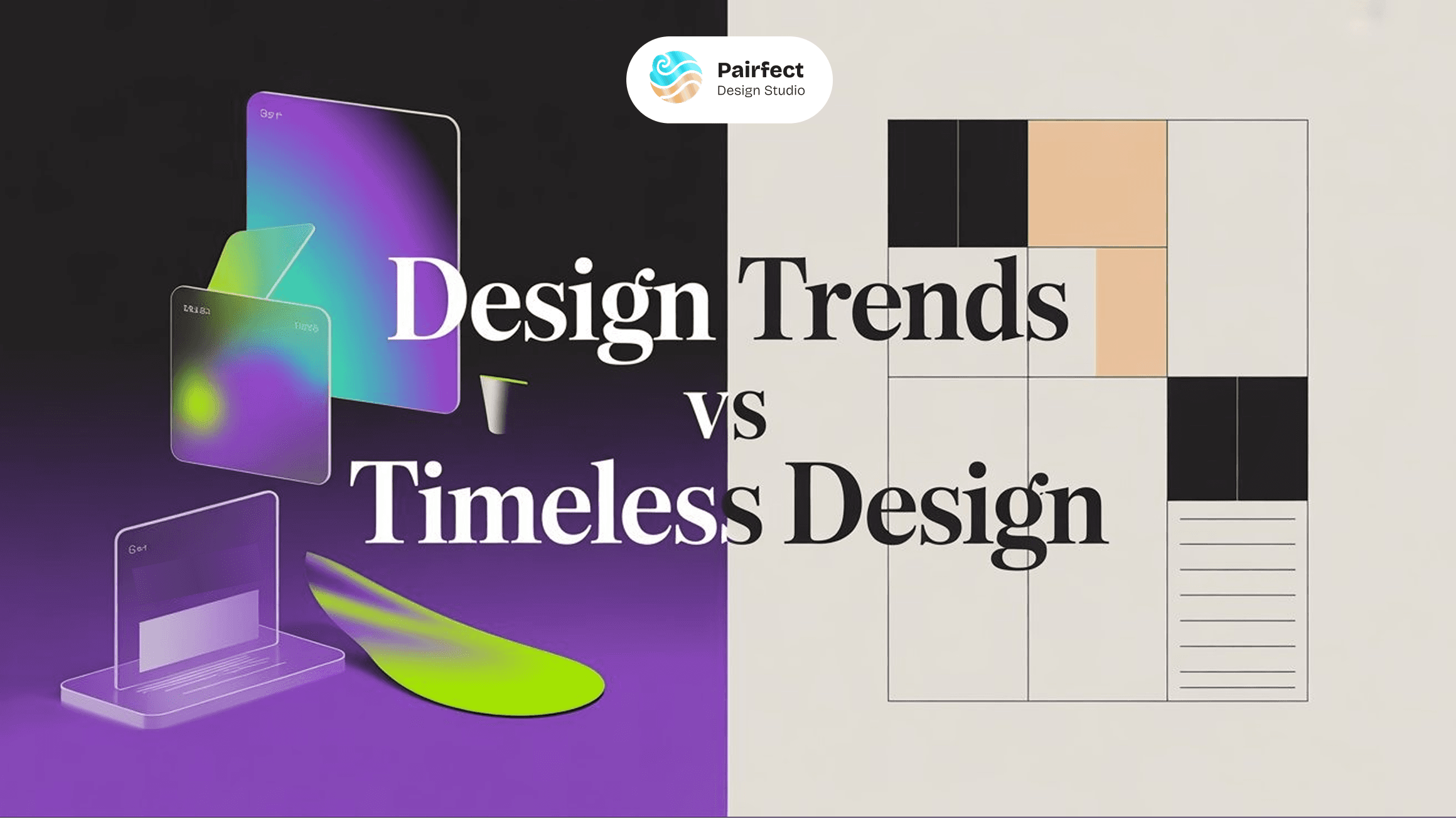
Design Trends vs Timeless Design: What Should You Choose?
Design Trends vs Timeless Design: What Should You Choose?
Design trends offer fresh, eye catching appeal and help brands stay relevant in fast-moving digital spaces, but they can fade quickly.
In the fast paced and ever changing world of design, one question remains constant for designers, marketers, and business owners alike: design trends vs timeless design, what should you choose? The debate around design trends vs classic design has become increasingly important as brands attempt to stay relevant without losing credibility. Both approaches offer value, but choosing the wrong design approach can lead to wasted resources, poor engagement, and a brand that feels outdated faster than expected.
Design is far more than surface level visuals. It plays a vital role in communication, user experience, emotional connection, and long term brand perception. Whether you lean toward modern vs timeless design, the decision must be intentional and aligned with long term goals. To make an informed choice, let’s explore what are design trends, what is timeless design, and how each approach affects usability, branding, and longevity.
Understanding Design Trends
Design trends are visual styles, patterns, and methods that become popular during a specific time period. These trends evolve due to cultural shifts, technological advancements, social behavior, and global events. When discussing what are design trends, examples often include minimalist design trends, bold typography, dark mode UI design, glassmorphism UI, AI-generated design, nostalgic or retro visuals, motion-heavy layouts, and micro-interactions in UX.
In today’s digital landscape, modern web design trends, UI UX design trends, and design trends in branding change rapidly. Social platforms, design tools, and emerging technologies constantly shape how trend driven design is adopted and perceived.
Why Design Trends Are So Attractive
The appeal of trends lies in their freshness and relevance. Trend driven design instantly signals that a brand is current, modern, and aware of industry movement. This is why modern design trends in UI UX are heavily used in startups, social platforms, and digital products.
Some benefits of trend-driven design include:
Immediate visual impact
Strong appeal to younger, trend-conscious audiences
Competitive advantage in fast-moving markets
Ideal for advertising, social media, and product launches
Works well for short-term branding strategies
For industries like fashion, entertainment, social media, and technology, trendy design vs functional design often leans toward trend adoption because novelty matters.
When used correctly, design trends vs timeless design doesn’t have to be a battle, it can be a strategic choice.
The Downside of Chasing Design Trends
Despite their popularity, trends come with limitations. One of the biggest disadvantages of design trends is their short lifespan. Designs heavily dependent on trends often require frequent redesigns.
Common challenges include:
Trend driven design becomes outdated quickly
Visual novelty fades, reducing trust
Functionality is often sacrificed for appearance
Many trendy designs look similar, hurting brand differentiation
A design that feels innovative today may feel obsolete within a year. This is where trend driven design vs timeless design becomes a critical discussion for long term branding.
What Is Timeless Design?
So, what is timeless design? Timeless design is built on principles that remain effective despite changing trends. Timeless design principles focus on usability, clarity, balance, hierarchy, and longevity rather than short-term visual excitement.
Timeless design prioritizes:
Simplicity and minimalism
Neutral color palettes
Standardized typography
Functionality first
User-centered design principles
Accessibility and clarity
Rather than chasing attention, timeless design focuses on creating meaningful, usable experiences that last.
Characteristics of Timeless Design
Common traits associated with timeless design include:
Minimalist layouts
Bold but restrained visual choices
Clear navigation and structure
Accessibility-first design
Consistent spacing and hierarchy
These qualities make timeless design especially effective for design for long-term branding and long-lasting design strategies.
Why Timeless Design Works
Timeless designs convey trust, familiarity, and stability. Users instinctively feel comfortable with interfaces that prioritize usability over visual noise. This is why benefits of timeless design include:
Relevance over time
Lower redesign and maintenance costs
Strong brand recognition
Better usability across generations
Consistent user experience
Industries such as finance, healthcare, education, architecture, and enterprise software rely heavily on timeless design because credibility matters more than trendiness.
When to Use Design Trends
You should consider trend driven design if:
1. Launching a New Product or Campaign
Short-term initiatives benefit from bold visuals and modern web design trends.
2. Targeting Trend Conscious Audiences
Gen Z, designers, creators, and early adopters respond positively to UI UX design trends and experimental visuals.
3. Innovative or Disruptive Branding
Startups often use design trends in branding to communicate innovation.
4. Short Lived Marketing Efforts
Landing pages, microsites, social creatives, and seasonal campaigns thrive with trendy visuals.
When to Choose Timeless Design
Timeless design is ideal when:
1. Building a Long Lasting Brand
Frequent redesigns hurt consistency. Timeless design ensures brand stability.
2. Trust and Credibility Are Critical
Healthcare, finance, and enterprise platforms rely on brand consistency in design.
3. The Product Is Complex
Usability should always outweigh visual experimentation.
4. Consistency Across Platforms
Timeless design scales better across products, services, and touchpoints.
The Smart Approach: Combining Both
The best design solutions don’t force a choice between modern vs timeless design. Instead, they balance both approaches.
How to Blend Trendy and Timeless Design
Build a timeless foundation using grids, hierarchy, and spacing
Add trends selectively (colors, illustrations, animations)
Maintain strong UX and accessibility-first design
Avoid overusing trendy UI effects
Keep functionality intact
This balanced method supports a sustainable design approach that feels modern without becoming disposable.
Common Mistakes Designers Make
Focusing only on aesthetics
Ignoring user centered design principles
Blindly following trends
Overusing animations and effects
Confusing “modern” with “usable”
Remember, trendy design vs functional design should never sacrifice usability.
Questions to Ask Before Choosing a Design Approach
Who is the target audience?
How long will this design be used?
What emotions should users feel?
Does this design support long term branding?
Will it remain functional in two years?
These questions help in choosing the right design approach.
Final Thoughts
Design trends vs timeless design is not about choosing one forever. Trends bring excitement, innovation, and attention. Timeless design delivers clarity, confidence, and longevity. Both are essential tools.
Product design: what is it? It is strategy, clarity, and long-term thinking combined. Successful startups don’t treat design as decoration, they treat product design as a growth engine.
By focusing on user experience & product design, clarity, emotion, scalability, and performance, startups create products users genuinely enjoy. True success comes from understanding users deeply and designing with intention not trends.
At Pairfect Design Studio, we believe every design a business starts with user needs. By applying proven lessons from top startups, brands can build products that are visually appealing, scalable, and successful in the real world.

Tell Us What to Build
Share what you want to launch. product, website, or MVP, and we’ll respond with the right low‑code approach, estimate, and roadmap to go live.
Let’s Connect & Create Something Beautiful!
Reach out to us today and let’s discuss your needs.
Let’s Connect & Create Something Beautiful!
Reach out to us today and let’s discuss your needs.
Let’s Connect & Create Something Beautiful!
Reach out to us today and let’s discuss your needs.
Design trends offer fresh, eye catching appeal and help brands stay relevant in fast-moving digital spaces, but they can fade quickly.
Vignesh
UX UI Designer & Content Writer
Dec 30, 2025
Design Trends vs Timeless Design: What Should You Choose?
In the fast paced and ever changing world of design, one question remains constant for designers, marketers, and business owners alike: design trends vs timeless design, what should you choose? The debate around design trends vs classic design has become increasingly important as brands attempt to stay relevant without losing credibility. Both approaches offer value, but choosing the wrong design approach can lead to wasted resources, poor engagement, and a brand that feels outdated faster than expected.
Design is far more than surface level visuals. It plays a vital role in communication, user experience, emotional connection, and long term brand perception. Whether you lean toward modern vs timeless design, the decision must be intentional and aligned with long term goals. To make an informed choice, let’s explore what are design trends, what is timeless design, and how each approach affects usability, branding, and longevity.
Understanding Design Trends
Design trends are visual styles, patterns, and methods that become popular during a specific time period. These trends evolve due to cultural shifts, technological advancements, social behavior, and global events. When discussing what are design trends, examples often include minimalist design trends, bold typography, dark mode UI design, glassmorphism UI, AI-generated design, nostalgic or retro visuals, motion-heavy layouts, and micro-interactions in UX.
In today’s digital landscape, modern web design trends, UI UX design trends, and design trends in branding change rapidly. Social platforms, design tools, and emerging technologies constantly shape how trend driven design is adopted and perceived.
Why Design Trends Are So Attractive
The appeal of trends lies in their freshness and relevance. Trend driven design instantly signals that a brand is current, modern, and aware of industry movement. This is why modern design trends in UI UX are heavily used in startups, social platforms, and digital products.
Some benefits of trend-driven design include:
Immediate visual impact
Strong appeal to younger, trend-conscious audiences
Competitive advantage in fast-moving markets
Ideal for advertising, social media, and product launches
Works well for short-term branding strategies
For industries like fashion, entertainment, social media, and technology, trendy design vs functional design often leans toward trend adoption because novelty matters.
When used correctly, design trends vs timeless design doesn’t have to be a battle, it can be a strategic choice.
The Downside of Chasing Design Trends
Despite their popularity, trends come with limitations. One of the biggest disadvantages of design trends is their short lifespan. Designs heavily dependent on trends often require frequent redesigns.
Common challenges include:
Trend driven design becomes outdated quickly
Visual novelty fades, reducing trust
Functionality is often sacrificed for appearance
Many trendy designs look similar, hurting brand differentiation
A design that feels innovative today may feel obsolete within a year. This is where trend driven design vs timeless design becomes a critical discussion for long term branding.
What Is Timeless Design?
So, what is timeless design? Timeless design is built on principles that remain effective despite changing trends. Timeless design principles focus on usability, clarity, balance, hierarchy, and longevity rather than short-term visual excitement.
Timeless design prioritizes:
Simplicity and minimalism
Neutral color palettes
Standardized typography
Functionality first
User-centered design principles
Accessibility and clarity
Rather than chasing attention, timeless design focuses on creating meaningful, usable experiences that last.
Characteristics of Timeless Design
Common traits associated with timeless design include:
Minimalist layouts
Bold but restrained visual choices
Clear navigation and structure
Accessibility-first design
Consistent spacing and hierarchy
These qualities make timeless design especially effective for design for long-term branding and long-lasting design strategies.
Why Timeless Design Works
Timeless designs convey trust, familiarity, and stability. Users instinctively feel comfortable with interfaces that prioritize usability over visual noise. This is why benefits of timeless design include:
Relevance over time
Lower redesign and maintenance costs
Strong brand recognition
Better usability across generations
Consistent user experience
Industries such as finance, healthcare, education, architecture, and enterprise software rely heavily on timeless design because credibility matters more than trendiness.
When to Use Design Trends
You should consider trend driven design if:
1. Launching a New Product or Campaign
Short-term initiatives benefit from bold visuals and modern web design trends.
2. Targeting Trend Conscious Audiences
Gen Z, designers, creators, and early adopters respond positively to UI UX design trends and experimental visuals.
3. Innovative or Disruptive Branding
Startups often use design trends in branding to communicate innovation.
4. Short Lived Marketing Efforts
Landing pages, microsites, social creatives, and seasonal campaigns thrive with trendy visuals.
When to Choose Timeless Design
Timeless design is ideal when:
1. Building a Long Lasting Brand
Frequent redesigns hurt consistency. Timeless design ensures brand stability.
2. Trust and Credibility Are Critical
Healthcare, finance, and enterprise platforms rely on brand consistency in design.
3. The Product Is Complex
Usability should always outweigh visual experimentation.
4. Consistency Across Platforms
Timeless design scales better across products, services, and touchpoints.
The Smart Approach: Combining Both
The best design solutions don’t force a choice between modern vs timeless design. Instead, they balance both approaches.
How to Blend Trendy and Timeless Design
Build a timeless foundation using grids, hierarchy, and spacing
Add trends selectively (colors, illustrations, animations)
Maintain strong UX and accessibility-first design
Avoid overusing trendy UI effects
Keep functionality intact
This balanced method supports a sustainable design approach that feels modern without becoming disposable.
Common Mistakes Designers Make
Focusing only on aesthetics
Ignoring user centered design principles
Blindly following trends
Overusing animations and effects
Confusing “modern” with “usable”
Remember, trendy design vs functional design should never sacrifice usability.
Questions to Ask Before Choosing a Design Approach
Who is the target audience?
How long will this design be used?
What emotions should users feel?
Does this design support long term branding?
Will it remain functional in two years?
These questions help in choosing the right design approach.
Final Thoughts
Design trends vs timeless design is not about choosing one forever. Trends bring excitement, innovation, and attention. Timeless design delivers clarity, confidence, and longevity. Both are essential tools.
Product design: what is it? It is strategy, clarity, and long-term thinking combined. Successful startups don’t treat design as decoration, they treat product design as a growth engine.
By focusing on user experience & product design, clarity, emotion, scalability, and performance, startups create products users genuinely enjoy. True success comes from understanding users deeply and designing with intention not trends.
At Pairfect Design Studio, we believe every design a business starts with user needs. By applying proven lessons from top startups, brands can build products that are visually appealing, scalable, and successful in the real world.
Tell Us What to Build
Share what you want to launch. product, website, or MVP, and we’ll respond with the right low‑code approach, estimate, and roadmap to go live.